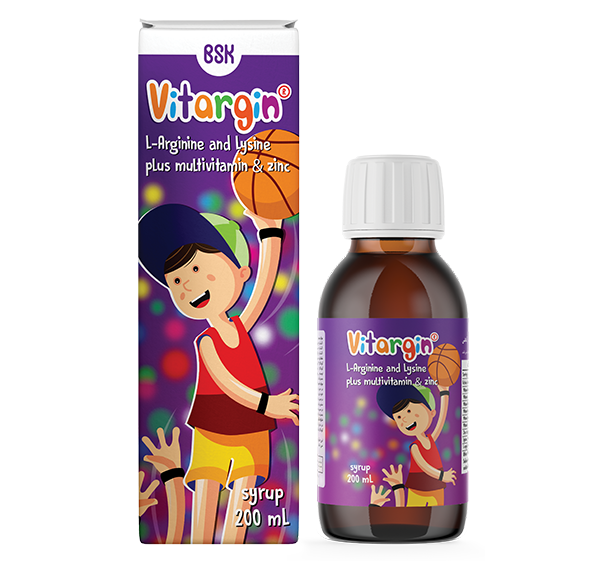
Arginine is an amino acid that affects growth hormone secretion and addresses growth-related issues in children. Lysine is another essential amino acid that is not produced by the body and is necessary for collagen production and bone health. Zinc and vitamin A can help increase children’s weight and height, support development, and protect their epithelial tissues. The combination of these ingredients creates an effective product for addressing health-related issues.
Vitargin® is a 200 ml pineapple-flavored syrup.
The presence of lysine alongside L-arginine in this product enhances growth stimulation and the effectiveness of L-arginine. Additionally, the other vitamins in Vitargine play a beneficial role in the product's performance. Vitargine syrup is suitable for stimulating growth hormone secretion, strengthening the immune system, and improving appetite in children and infants.

Stimulate growth hormone and improve growth
Essential amino acids for growth and development
Appetite Stimulant
Supports the stimulation of growth hormone secretion
Strengthens the immune system
Improves appetite
Each five milliliter contains:
| Active ingredients | Amount |
|---|---|
| L-arginine | 500 mg |
| Lysine | 100 mg |
| Vitamin A | 600 International Units (IU) |
| Vitamin D3 | 600 International Units (IU) |
| Zinc gluconate | 5 mg |
| Vitamin B1 | 1 mg |
| Vitamin B3 | 5 mg |
| Vitamin B6 | 2 mg |
| Vitamin B12 | 1.2 micrograms |
This product is free of gluten, dyes, and alcohol.
Children aged 3 to 7 years: 5 ml daily after meals
Children older than 7 years: 10 ml daily after meals
Children under 3 years: as directed
200 ml oral syrup with a graduated measuring cup and a consumer information brochure
L-Arginine is an essential amino acid known for its role in growth hormone production. Studies have shown that arginine, by influencing growth hormone levels, can help increase the height growth of children. This amino acid also plays a role in strengthening the immune system. Lysine is another essential amino acid that, in addition to its role in growth, is involved in the production of carnitine, which helps convert fatty acids into energy. It also aids in collagen production and enhances calcium absorption, leading to stronger bones and teeth in children.
Maintaining bone health throughout life is associated with vitamin D, as this vitamin promotes calcium absorption in the intestines. Due to the physiological conditions of the growth period and the low vitamin D content in breast milk, infants and children have a high requirement for vitamin D, and deficiency during this period is common. Severe vitamin D3 deficiency in children leads to rickets, while in adults it causes osteomalacia. Vitamin D3 also supports immune system function, muscle activity, and reduces the risk of various cancers and autoimmune diseases such as multiple sclerosis.
Another essential fat-soluble vitamin for growth, development, vision maintenance, and immune system support is vitamin A, whose deficiency can result in reduced resistance to infections, night blindness, and stunted growth.
Zinc is an essential mineral for growth and tissue repair and plays a key role in the body. Zinc deficiency reduces the body’s ability to fight infections.
B vitamins are water-soluble vitamins essential for cellular metabolism and proper nervous system function. These vitamins help the body convert food into energy, supporting proper metabolism, and they can also contribute to the production of new blood cells.
Thiamine (vitamin B1) is a coenzyme essential for carbohydrate metabolism, which can generate energy through carbohydrate metabolism.
Vitamin B3 acts as a cofactor in the mitochondrial respiratory chain, helping produce energy from food.
Vitamin B6 is necessary for the metabolism of amino acids, carbohydrates, and fats. Its deficiency can affect peripheral nerves, skin, mucous membranes, and the hematopoietic system.
Vitamin B12 contributes to nucleoprotein and myelin synthesis, cell regeneration, normal body growth, and the production of healthy red blood cells (improving oxygen delivery). Vitamin B12 can also play a role in the synthesis of carbohydrates, fats, and proteins.
Oral consumption of L-arginine can cause digestive side effects in some people, such as abdominal pain, bloating, nausea, diarrhea, and headaches, insomnia, hot flashes, and hives.
This product has no specific drug interactions in the pediatric category.
However, in general, avoid using products containing L-arginine with medications for hypothyroidism, warfarin, aspirin, heart and blood pressure drugs, sildenafil, tadalafil, potassium-sparing diuretics, and antidiabetic medications.
During the use of this product, the intake of fortified foods, dietary supplements, and other concurrently prescribed medications should be evaluated for levels of vitamins A, D, and iron to prevent vitamin toxicity.
Individuals with high serum calcium or vitamin D levels should use this product under medical supervision.
Use of this product should be discontinued at least two weeks before elective surgeries, as arginine’s effect on blood pressure may interfere with blood pressure management during and after surgery.
Do not use this product if you have a known allergy to any of its ingredients.
This product should not be administered to children undergoing treatment with acitretin or calcipotriol.
Store at a temperature below 25°C and away from light, moisture, frost and the reach of children.